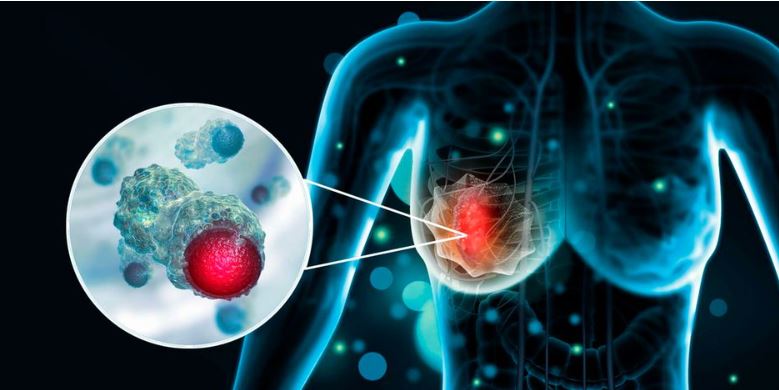
A new study published in The Lancet Digital Health suggests that artificial intelligence could significantly improve breast cancer screening. Researchers found that AI systems can help identify women at higher risk of developing breast cancer even after a normal mammogram, potentially enabling earlier diagnosis and saving lives.
Study: Artificial Intelligence May Improve Breast Cancer Screening Accuracy
Early detection remains one of the most important factors in saving lives from breast cancer. Regular screening allows doctors to identify cancer at an early stage, when treatment is often more effective and survival rates are significantly higher.
Now, a new international study suggests that artificial intelligence (AI) could help improve the accuracy of breast cancer screening programs and identify women at higher risk even when standard imaging appears normal.
The study, conducted by researchers in Australia and published in the scientific journal The Lancet Digital Health, highlights the potential of AI technology to enhance current screening methods and support doctors in detecting breast cancer earlier.
Why Early Detection Matters
Breast cancer is one of the most common cancers affecting women worldwide. Detecting the disease early greatly increases the chances of successful treatment.
Regular breast screening programs are designed to identify tumors before symptoms appear. Studies have shown that routine breast screening can reduce the risk of death from breast cancer by up to 50 percent.
However, current screening systems still have limitations.
In many cases, breast cancer is detected through mammography, an imaging technique that uses low-dose X-rays to examine breast tissue and identify potential abnormalities.
Although mammography is an effective tool, it does not detect every case of breast cancer.
How Breast Cancer Screening Works Today
In countries such as Australia, national screening programs offer free mammograms every two years for women aged 50 to 74. These programs aim to detect cancer early, before symptoms develop.
Despite the availability of screening services, participation rates remain lower than expected. In Australia, just over half of eligible women take part in the national breast screening program.
Even among women who regularly undergo screening, some cancers develop between two scheduled mammograms. These are known as interval cancers.
Interval cancers account for approximately 25 percent of breast cancer cases detected after a normal screening result. Unfortunately, these cancers tend to be more aggressive and are often diagnosed at a later stage.
Researchers believe that more sensitive detection methods could help identify these cases earlier.
The Role of Artificial Intelligence
The new study explored how artificial intelligence could help improve breast cancer screening.
AI systems can analyze large volumes of medical images and detect subtle patterns that may be difficult for humans to identify.
In this research, scientists evaluated a specialized AI tool called BRAIx, which was trained using data from the BreastScreen Australia program.
The goal of the study was to determine whether BRAIx could predict which women might develop breast cancer within four years after receiving a normal mammogram result.
Rather than replacing doctors, the AI system was designed to assist radiologists by providing additional analysis and risk predictions.
How the Study Was Conducted
The research included two major groups of participants.
The first group consisted of 95,823 women in Australia, all of whom had received a normal mammogram result during screening.
Among these women, 1.1 percent were diagnosed with breast cancer within four years of their screening.
The second group included 4,430 women in Sweden who also had normal mammograms. In this group, 6.9 percent developed breast cancer within two years.
By analyzing imaging data and patient records, the AI system attempted to predict which women would later develop cancer.
What the Results Showed
The results were promising.
The AI tool successfully identified women who were at a higher risk of developing breast cancer within one to two years after a normal mammogram.
In some cases, the system even predicted cancers that were diagnosed three to four years later, although the accuracy decreased slightly over longer periods.
These findings suggest that artificial intelligence could play an important role in identifying women who may benefit from additional screening tests.
Additional Tests That May Help
If AI systems detect a higher risk of breast cancer, doctors could recommend additional imaging tests to investigate further.
Two of the most common follow-up tests include:
Magnetic Resonance Imaging (MRI) – This technology uses magnetic fields and radio waves to create detailed images of breast tissue.
Contrast-enhanced mammography – This technique uses a special contrast agent to make tumors more visible during imaging.
These additional tests may help detect cancers that standard mammograms might miss.
Supporting Evidence from Other Research
Similar findings have been reported in other studies.
A 2024 Swedish study found that when women identified as high-risk received additional MRI scans, about 6.5 percent were diagnosed with cancers that mammograms had failed to detect.
This supports the idea that combining AI analysis with personalized screening strategies may improve detection rates.
Understanding Individual Risk Factors
Researchers also emphasize that breast cancer risk varies from person to person.
One important factor is breast density, which refers to the amount of glandular tissue in the breast.
Women with dense breast tissue face two challenges:
They have a higher risk of developing breast cancer.
Tumors are harder to detect in mammograms because dense tissue appears similar to tumors on imaging scans.
Genetic testing can also help identify risk.
Mutations in genes such as BRCA1 and BRCA2 significantly increase the likelihood of developing breast and ovarian cancer.
The Idea of Personalized Screening
Traditionally, breast cancer screening programs have followed a standard schedule, offering the same tests at the same intervals for most women.
However, researchers are increasingly exploring risk-based screening, where screening frequency and methods are tailored to each individual’s risk level.
Artificial intelligence could help make this approach more practical by analyzing imaging data and identifying women who may need more frequent or advanced screening.
Limitations of the Study
Like any scientific research, the study has certain limitations.
For example, the researchers noted that comparing AI predictions directly with genetic testing is difficult because they measure different aspects of risk.
Genetic tests estimate a woman’s lifetime risk, while the AI tool predicts the risk of developing cancer within the next four years.
Additionally, the study may not have used the most precise measurement methods for breast density, which could influence the accuracy of some predictions.
Because of these factors, researchers caution that the results should be interpreted carefully.
What the Future May Hold
Despite these limitations, the study adds to growing evidence that artificial intelligence could transform breast cancer screening.
Currently, the BRAIx system is being tested within the BreastScreen Victoria program in Australia to assist radiologists in analyzing mammograms.
Several other countries are also experimenting with similar AI-based technologies.
Experts believe that combining AI with personalized screening programs could lead to earlier detection, improved treatment outcomes, and ultimately save thousands of lives.